FLAME NOVICE: thali malice. Klikni in si oglej tedensko ponudbo. Restavracija Flame je po novem urniku odprta od 8h do 20h. Vsak dan po 8h strežemo pravi indijski masala chai

FLAME NOVICE: thali malice. Klikni in si oglej tedensko ponudbo. Restavracija Flame je po novem urniku odprta od 8h do 20h. Vsak dan po 8h strežemo pravi indijski masala chai
VSAK DAN V TEDNU NOVI THALI MENIJI. OGLEJ SI PONUDBO.
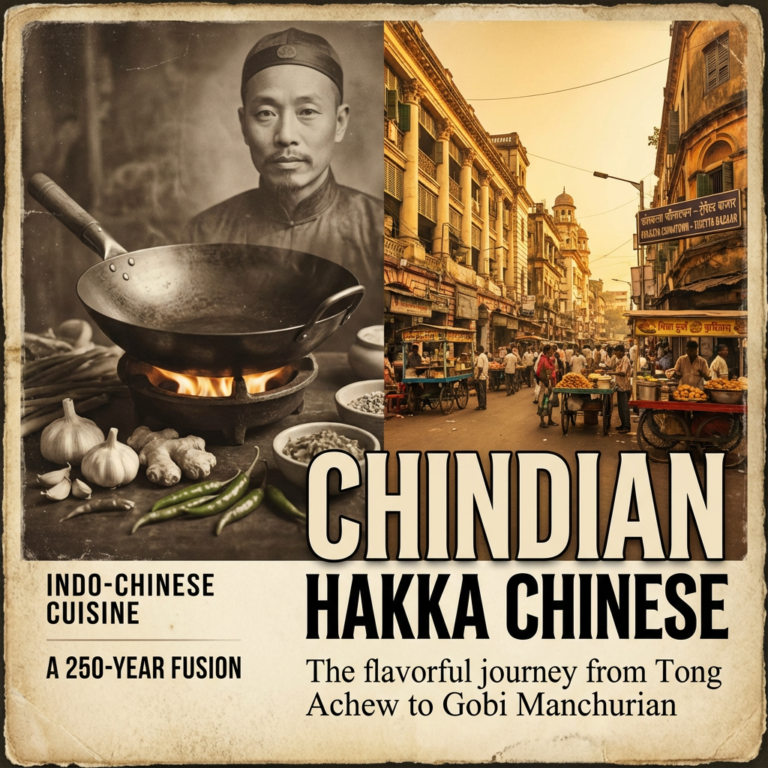
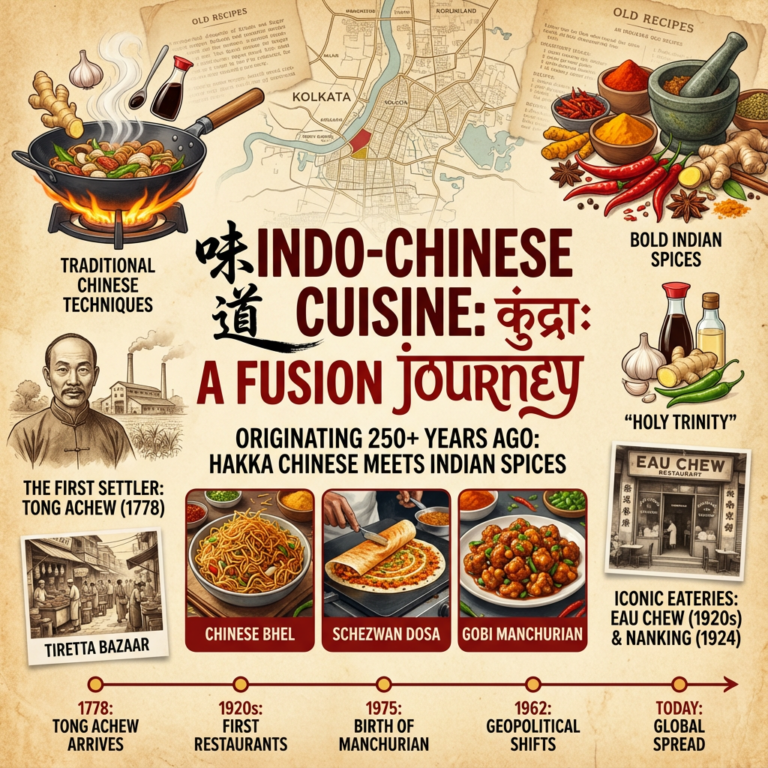
Indo-Chinese cuisine, often called “Chindian” or “Hakka Chinese,” is a distinct fusion that originated over 250 years ago. It blends traditional Chinese wok techniques with bold Indian spices to create a flavor profile that is neither purely Chinese nor traditional Indian.
Origin and Early History (1700s–1920s)
The First Settler: In 1778, Tong Achew (Yang Tai Chow), the first recorded Chinese immigrant, settled near Kolkata (then Calcutta) and established a sugar factory. After he passed away, his workers moved into the city, forming India’s oldest Chinatown in Tiretta Bazaar.
Hakka Influence: Most immigrants were Hakka and Cantonese, working in tanneries, carpentry, and shoe shops. They began selling simple, home-style food to their own community, which eventually evolved into street food for the local population.
First Restaurants: The iconic restaurant Eau Chew, founded by the Hong family in the 1920s, is one of the oldest surviving family-owned Indo-Chinese eateries in India. Another legendary spot, Nanking, opened in 1924 and became a favorite of Bollywood stars.
The “Indianization” of the Palate
As the cuisine spread, chefs adapted dishes to suit local tastes and ingredient availability:
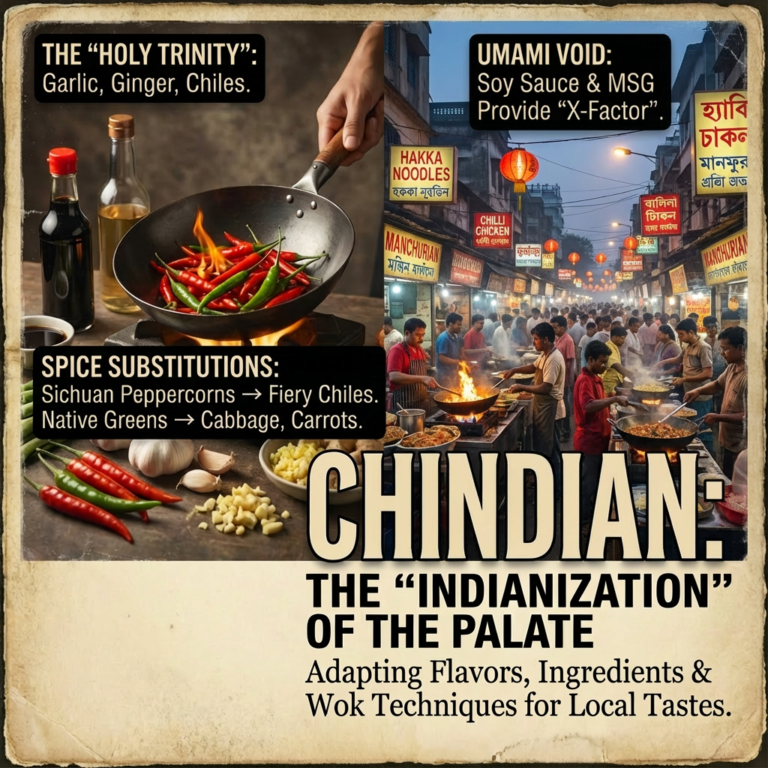
Spice Substitutions: Sichuan peppercorns were replaced with fiery red and green chiles. Local vegetables like cabbage and carrots were used instead of native Chinese greens like bok choy.
The Umami Void: Indian cuisine traditionally lacked umami flavors; the introduction of soy sauce and MSG provided a new “X-factor” that resonated with the Indian palate.
The “Holy Trinity”: Indo-Chinese cooking relies on a base of garlic, ginger, and green chiles, finished with a heavy hand of soy sauce and vinegar.
Key Milestones and Inventions
The Birth of Manchurian (1975): Chef Nelson Wang, a third-generation immigrant working at Mumbai’s Cricket Club, is credited with inventing Chicken Manchurian. He famously combined Indian aromatics (garlic, ginger, chiles) with soy sauce and cornstarch instead of garam masala, creating an instant sensation.
Schezwan Sauce: Unlike real Sichuan sauce, the Indian “Schezwan” version was developed by the Hong family at Eau Chew, using local ingredients to create a pungent, oil-heavy red sauce.
Geopolitical Shifts (1962): The 1962 Sino-Indian War led to widespread anti-Chinese sentiment and the internment of many Chinese-Indians, causing a large portion of the community to migrate to the West. This ironically helped spread Indo-Chinese food globally to the US, UK, and Canada.
Modern Cultural Impact
Today, Indo-Chinese is arguably India’s favorite “foreign” cuisine. It has spawned unique street variations like:
Chinese Bhel: Crispy fried noodles tossed with fresh vegetables and spicy chutney.
Schezwan Dosa: A traditional South Indian crepe stuffed with spicy Indo-Chinese stir-fry.
Gobi Manchurian: A vegetarian staple where cauliflower is batter-fried and tossed in a tangy sauce.
AI responses may include mistakes.


Posted on GoogleTrustindex verifies that the original source of the review is Google. Zelo dobra restavracija, odlična hrana, prijazno osebje, sploh šef, zanimiva indijska glasba, še se bomo vrnili, zaljubili smo se v indijsko hrano...Posted on GoogleTrustindex verifies that the original source of the review is Google. Excellent indochinese cuisine meals, flavorful, juicy, tasty, not too greasy. Super pleasantly and hospitable host (owner), great music. We had Chow Mein and Tofu Massala. Perhaps the best southeast Asian food in Ljubljana!Posted on GoogleTrustindex verifies that the original source of the review is Google. Service is not up to standardsPosted on GoogleTrustindex verifies that the original source of the review is Google. Res top izkušnja! Jedla sva butter chicken, tikko masalo in naan – hrana je bila vrhunska in dejansko avtentična. Ambient je preprost in domač, so pa ravno malo prenavljali, ko sva bila tam, ampak naju ni motilo. Najbolj naju je prepričalo osebje. Natakarica zelo zgovorna, s prijetno energijo, na koncu pa je prišel do naju še glavni kuhar iz Indije. Malo smo poklepetali o hrani in naju na koncu častil še z indijskimi sladicami. Definitivno priporočam vsem, ki bi radi probali pravo indijsko hrano na nivoju.Posted on GoogleTrustindex verifies that the original source of the review is Google. Posted on GoogleTrustindex verifies that the original source of the review is Google. Very friendly people and good food.Posted on GoogleTrustindex verifies that the original source of the review is Google. Zelo okusna hrana, še posebej piščanec tikka masala. Šef oz. kuhar je zelo prijazen, ker priporoča kaj vzeti in se prilagaja gostom.Posted on GoogleTrustindex verifies that the original source of the review is Google. The most authentic Indian food around, by far! Great service, great experience visiting the place.Posted on GoogleTrustindex verifies that the original source of the review is Google. Very good Indian cuisine with a great price level. The owner was very friendly as well.Posted on GoogleTrustindex verifies that the original source of the review is Google. This Indian restaurant was a very enjoyable experience overall. The food was incredibly delicious, with rich flavors and authentic taste, and the portions were generous, making it great value for money. The owner was especially friendly and welcoming, which added a personal and warm touch to the visit. Combined with the reasonable prices, this makes the restaurant a place I would definitely return to. The only area for improvement would be the ambiance. Updating the interior, such as the tables and furnishings, could really enhance the overall dining experience. Aside from that, I can highly recommend this restaurant.